
Blogs
Wild dagga (Leonotis leonurus): what it is, what is known and how to use it responsibly
Wild dagga is one of those herbs with a name that raises eyebrows. In South Africa “dagga” is the everyday word for cannabis, so “wild dagga” sounds like a wild form of weed. It is not. The plant is Leonotis leonurus, a shrub from the mint family with striking orange flowers.
In this guide we look at where wild dagga comes from, how it has been used, what researchers have actually found in the plant, and what you should know before you try it. You must be 18 or older to buy it in our shop.
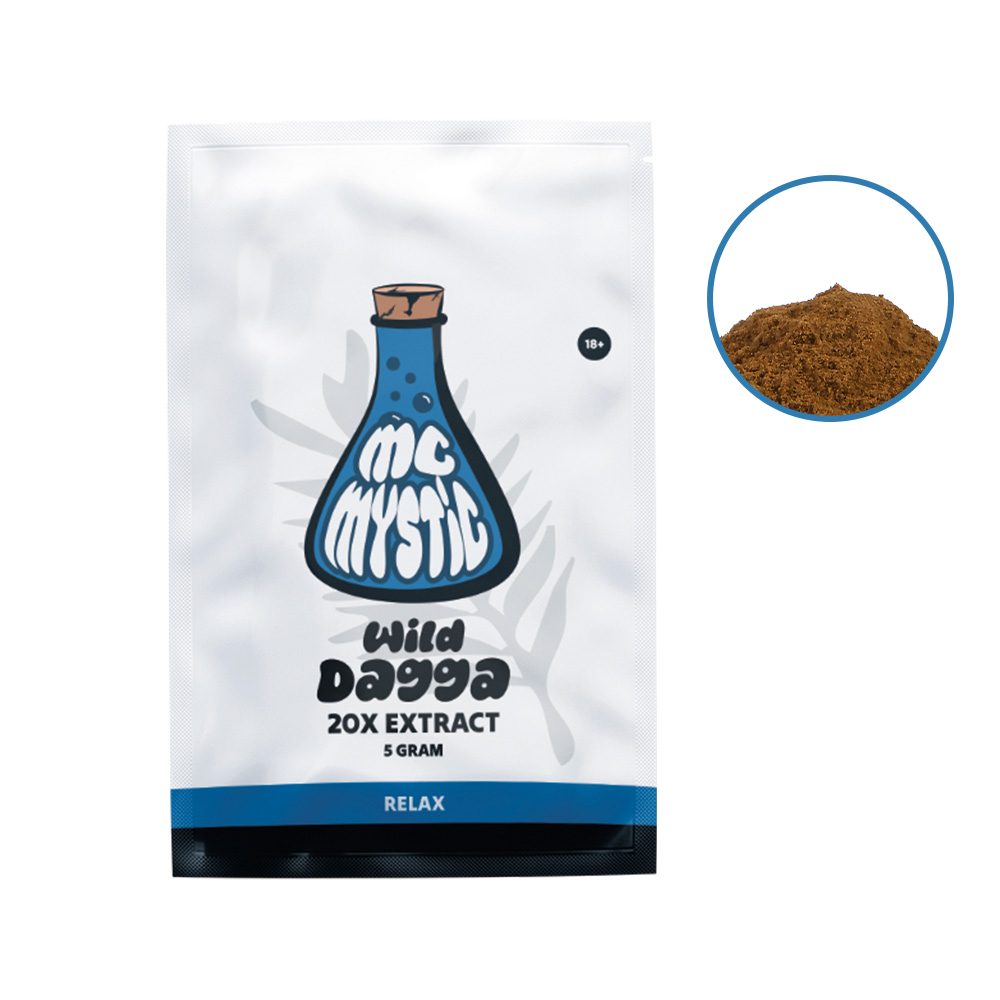
Table des matières
What is wild dagga?
Leonotis leonurus is a perennial shrub that grows wild in grassland, along roadsides and on stream banks across much of South Africa. It can reach two metres and has square stems, narrow, toothed leaves and whorls of bright orange, tube-shaped flowers. Those flowers gave the plant its other common names: lion’s tail and lion’s ear.
It belongs to the Lamiaceae, the same plant family as mint, sage, basil and motherwort. Sunbirds love the nectar, which is why the shrub is also a popular garden plant in warm climates. Many people in Europe first see it as an ornamental, not as a herb.
Wild dagga at a glance
- Botanical name: Leonotis leonurus
- Other names: lion’s tail, lion’s ear, wilde dagga (Afrikaans)
- Family: Lamiaceae (mint family)
- Origin: South Africa
- Related to cannabis? No, not botanically and not chemically
Why is it called “wild cannabis”?
The name probably comes from the way the plant was used: the dried leaves were traditionally smoked, and it was said to have a mild, relaxing effect. That was enough for colonial-era writers and later herb sellers to link it to dagga, or cannabis.
Chemically there is no link. Wild dagga does not contain THC, CBD or other cannabinoids. Anyone who expects a cannabis-like high will be disappointed, and that misunderstanding is one of the main reasons why people sometimes use far too much of it.
Traditional use in South Africa
A review of the traditional use of Leonotis leonurus published in the Journal of Ethnopharmacology in 2015 describes a long list of uses by Khoikhoi, San, Zulu and Xhosa communities. Preparations were made from the leaves, flowers, stems and roots.
- Decoctions and teas were used for coughs, colds, fever and chest complaints.
- Topical preparations were applied to skin complaints, insect bites and wounds.
- The dried leaves were smoked, both as a remedy and in a social or ritual setting.
These are records of traditional practice, not proof that the plant works for any of these complaints. Several of the uses have never been studied in people at all.
What is in wild dagga?
Researchers have identified many compounds in Leonotis leonurus. The most important is marrubiin, a bitter diterpene also found in white horehound. In laboratory and animal studies marrubiin showed anti-inflammatory and heart-protective activity, but there are no human trials.
What about leonurine?
Many websites say that wild dagga contains leonurine and that this compound is responsible for its effects. Scientific analyses do not support that. Leonurine is found in motherwort (Leonurus species), a different plant with a similar name. The 2015 review of the plant’s chemistry notes that leonurine has not been detected in Leonotis leonurus in scientific analyses. The mix-up probably comes from the similar Latin names.
In short: there is still no clear scientific explanation for the relaxing effect people describe. Most of what you read about how wild dagga works is based on user reports.
What do people report?
Users usually describe wild dagga as mild. Typical reports mention a relaxed body, a calmer mind and sometimes a slightly brighter mood. The effect is subtle, and many people notice little or nothing at all.
Our product description lists the same picture: depending on the person and the amount it may feel relaxing, mildly uplifting and calming. Effects vary from person to person.
Because the effect is mild, it can be tempting to take more. That is not a good idea. A higher amount mainly increases the chance of side effects.
Is wild dagga safe?
There are no clinical studies on the safety of wild dagga in people. What we know comes from animal research and from the experience of users.
- Animal studies: a 2008 study in rats found that repeated, high doses of a water extract affected the blood, liver and kidneys. Very high single doses were fatal. These amounts are far above what a person would use, but they show that “natural” does not mean harmless.
- Reported side effects: dizziness, drowsiness, dry mouth and reduced concentration. Too much can cause headache or nausea.
- Interactions: marrubiin influenced blood clotting and blood sugar in laboratory research. If you use blood thinners, diabetes medication or other medicines, talk to your doctor or pharmacist first.
Do not use wild dagga if you
- are under 18, pregnant or breastfeeding
- have heart, liver or kidney problems
- use medication, especially blood thinners or diabetes medication
- want to drive, operate machinery or combine it with alcohol or drugs
Wild dagga at Tatanka
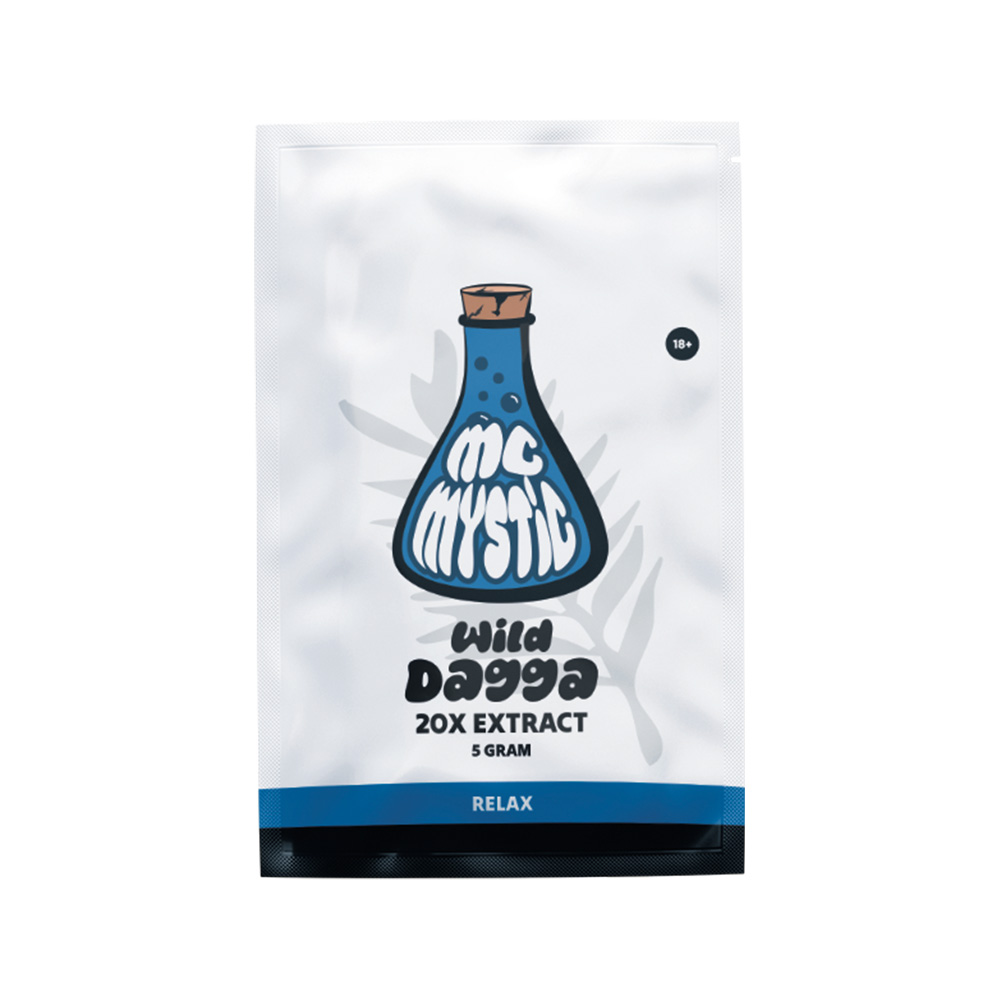
In our shop you will find Wild Dagga 20x extract from McMystic, in a 5 gram pack. According to the label the maximum is one gram per day. The pack describes how to make a cup of tea with it: pour hot water over the extract, let it steep for about ten minutes and drink slowly. Never use more than the daily maximum on the label.
Not sure what the “20x” means? Our article on what 10x, 20x and 50x mean on herbal extracts explains why a 20x extract is not simply twenty times stronger.
Interested in other calming herbs? Browse our relax herbs and the full range of extracts. If you prefer to brew herbs as a tea or tincture, you may also like our article on tinctures.
Is wild dagga legal in the Netherlands?
Leonotis leonurus is not listed in the Dutch Opium Act, and the plant is sold as an ornamental and as a herb. That is why we can offer it in our shop for adults of 18 and over. Rules differ per country, so check the local law before you travel with it.
Legal does not mean that it is a food or a medicine. Wild dagga is sold for adults who make an informed choice, not to treat or prevent any condition.
Frequently asked questions about wild dagga
Is wild dagga related to cannabis?
Does wild dagga contain leonurine?
What does wild dagga feel like?
How much wild dagga can I use?
Is wild dagga legal in the Netherlands?
What are the side effects of wild dagga?
Sources
- Nsuala et al. (2015), “Wild cannabis”: a review of the traditional use and phytochemistry of Leonotis leonurus, Journal of Ethnopharmacology
- Maphosa et al. (2008), Safety evaluation of the aqueous extract of Leonotis leonurus shoots in rats, Human & Experimental Toxicology
- Mnonopi et al. (2011), The cardioprotective effects of marrubiin, a diterpenoid found in Leonotis leonurus extracts, Journal of Ethnopharmacology