
Blogs
What do 5x, 10x, 20x and 50x mean on herbal extracts?
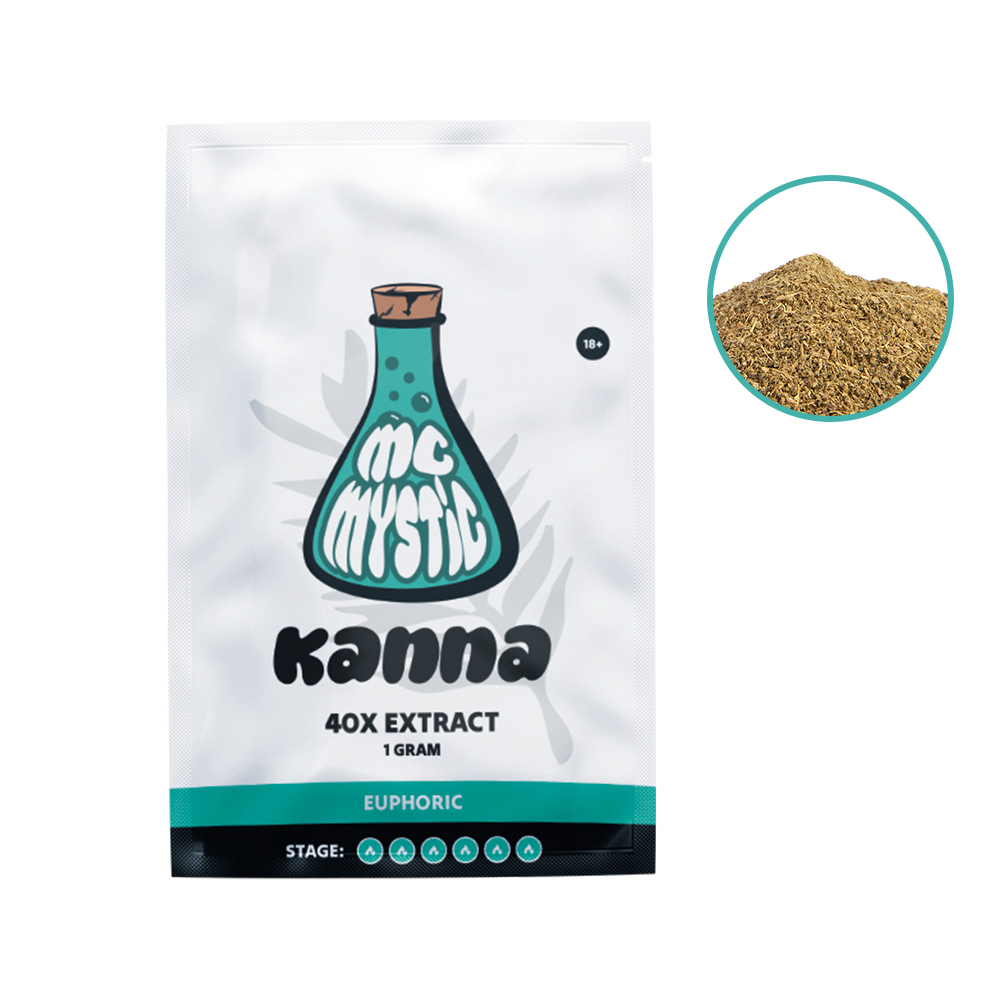
In the smartshop you will find herbal extracts with a number and an “x” on the label: Passion Flower 5x, Damiana 10x, Kratom 20x, Kanna 40x, Wild Lettuce 50x. It is tempting to read that as “five, ten or fifty times as strong”. That is not quite how it works.
In this article we explain what the number on an extract means, why a higher number is not automatically better, and why the serving on each pack is the only figure you should follow.
Inhaltsübersicht
The short answer
The “x” refers to the extraction ratio: how much plant material was used to make one part of extract. A 20x extract means that roughly 20 grams of dried plant were used for every gram of finished extract. In the herbal industry this is written as a ratio, for example 20:1. European regulators call it the drug-extract ratio, or DER.
So the number tells you something about the process: how much plant material went in. It does not tell you exactly how many active compounds are in the final product, or how strongly it will affect you.
How is a herbal extract made?
Simply put, an extract is made by soaking plant material in a solvent such as water, alcohol or a mixture of both. The solvent draws compounds out of the plant. After filtering, most of the solvent is evaporated, leaving a concentrated liquid, a sticky resin or, after further drying, a fine powder.
Because the plant fibres and much of the water and solvent are removed, you are left with a much smaller amount of material. That is where the ratio comes from: if 10 kilos of herb produce 1 kilo of extract, the result is a 10:1 or 10x extract.
Why 20x is not simply 20 times stronger
In theory, a 20x extract could contain up to 20 times as much of the extractable compounds per gram as the original plant. In practice, there are several reasons why the real strength can be different:
- The solvent matters. Water, alcohol and mixtures each pull out different compounds. Two 20x extracts made with a different solvent can have a very different composition.
- Not everything is extracted. Part of the active compounds stays behind in the plant material or is lost during heating and drying.
- The raw material varies. The content of a plant depends on the variety, region, season and storage. A 20x extract of weak leaf can be milder than a 10x extract of strong leaf.
- Carriers can be added. Some powders contain a carrier, such as maltodextrin, to keep them dry and flowable. That makes the powder less concentrated per gram than the ratio suggests.
- There is no fixed standard. For herbal medicines, rules on how a ratio is declared are strict. For smartshop herbs, the ratio is set by the producer and there is no independent check.
Some extracts are standardised instead: the label then states a fixed percentage of a specific compound. That says more about the content than a ratio, but it is rare for smartshop herbs.
What the number does tell you: smaller servings
Even if the ratio is not an exact strength meter, one thing is clear: a higher ratio means a more concentrated product, so you need much less of it. That is why the servings and daily maximums on extracts are so much lower than on whole herbs. A few examples from the labels of products in our shop:
| Produkt | Ratio | Pack size | Maximum per day (label) |
|---|---|---|---|
| Passion Flower 5x extract | 5:1 | 20 Gramm | 8 grams |
| Damiana 10x extract | 10:1 | 20 Gramm | 2 grams |
| Absinth 10x extract | 10:1 | 20 Gramm | 5 Gramm |
| Wild Dagga 20x extract | 20:1 | 5 Gramm | 1 Gramm |
| Kratom 20-facher Auszug | 20:1 | 2 grams | 1 Gramm |
The table also shows that the ratio is not the only thing that counts. Damiana 10x and Absinth 10x have the same ratio but a different daily maximum, because they are different plants with different compounds. You can never use the number to convert one product into another.
Extract, tincture or whole herb?
Extracts are not the only concentrated form. A tincture is a liquid extract, usually in alcohol, that is taken in drops. A whole herb or leaf powder is the plant material itself, without concentration. Read more in our article about tinctures as a way to use herbs.
Which form you prefer is personal. Whole herbs are milder per gram and closer to traditional use. Extracts are compact, need a smaller serving and are easier to mix into a drink. Precisely because they are so compact, they also leave less room for error.
Herbal extracts at Tatanka
- Kanna: Kanna-Pulver, Kanna 10x, Kanna 20x, Kanna 40x
- Kratom: Kratom 15x, Kratom 20x
- Relaxing herbs: Passion Flower 5x, Wild Dagga 20x, Wild Lettuce 50x
- Other: Damiana 10x, Absinth 10x, Blue Lotus 10x
- All extracts: extracts category
How to use extracts responsibly
Concentrated products ask for a bit more care than a bag of dried herbs:
- Read the label of the exact product. Servings differ per plant and per ratio. A 10x and a 20x of the same plant have a different serving and maximum.
- Never swap products one-to-one. Do not use the same amount of a 20x extract as you used of a whole herb or a 10x extract.
- Measure precisely. With servings of a gram or less, a kitchen spoon is far too rough. A small digital scale that measures to 0.01 gram is much more accurate.
- Start low and wait. Effects of herbs taken as tea can take a while to appear. Do not take more because you do not feel anything yet.
- Do not combine. Do not mix extracts with each other, with alcohol, medication or other drugs.
- Know when to skip. Do not use herbal extracts if you are under 18, pregnant or breastfeeding, take medication, or have heart, blood pressure, liver or kidney problems.
In short
The number on a herbal extract tells you how much plant material went into it, not exactly how strong it is. A higher number means a more concentrated product and therefore a smaller serving. Compare products by their label, not by their ratio, and always stick to the serving and daily maximum of the product you are using. Curious about the plants behind the extracts? Read more about kanna und kratom.
Frequently asked questions about extract ratios
What does 20x extract mean?
Is a 20x extract 20 times stronger than the herb?
Is a 50x extract better than a 10x extract?
What is the difference between an extract and a tincture?
What is a standardised extract?
How much extract should I use?
Sources
- European Medicines Agency: Guideline on declaration of herbal substances and herbal preparations
- European Medicines Agency: Questions and answers on quality of herbal medicinal products